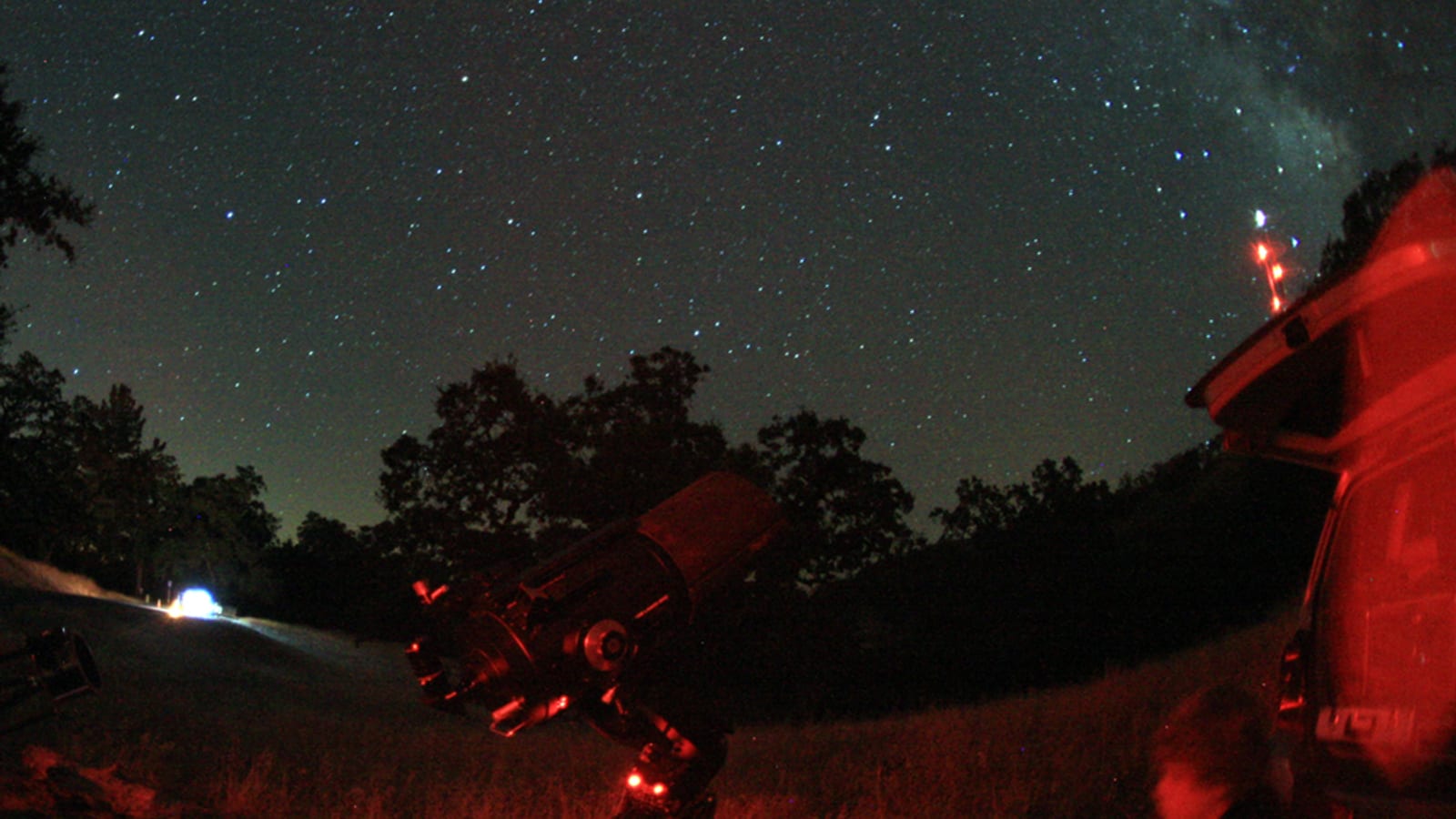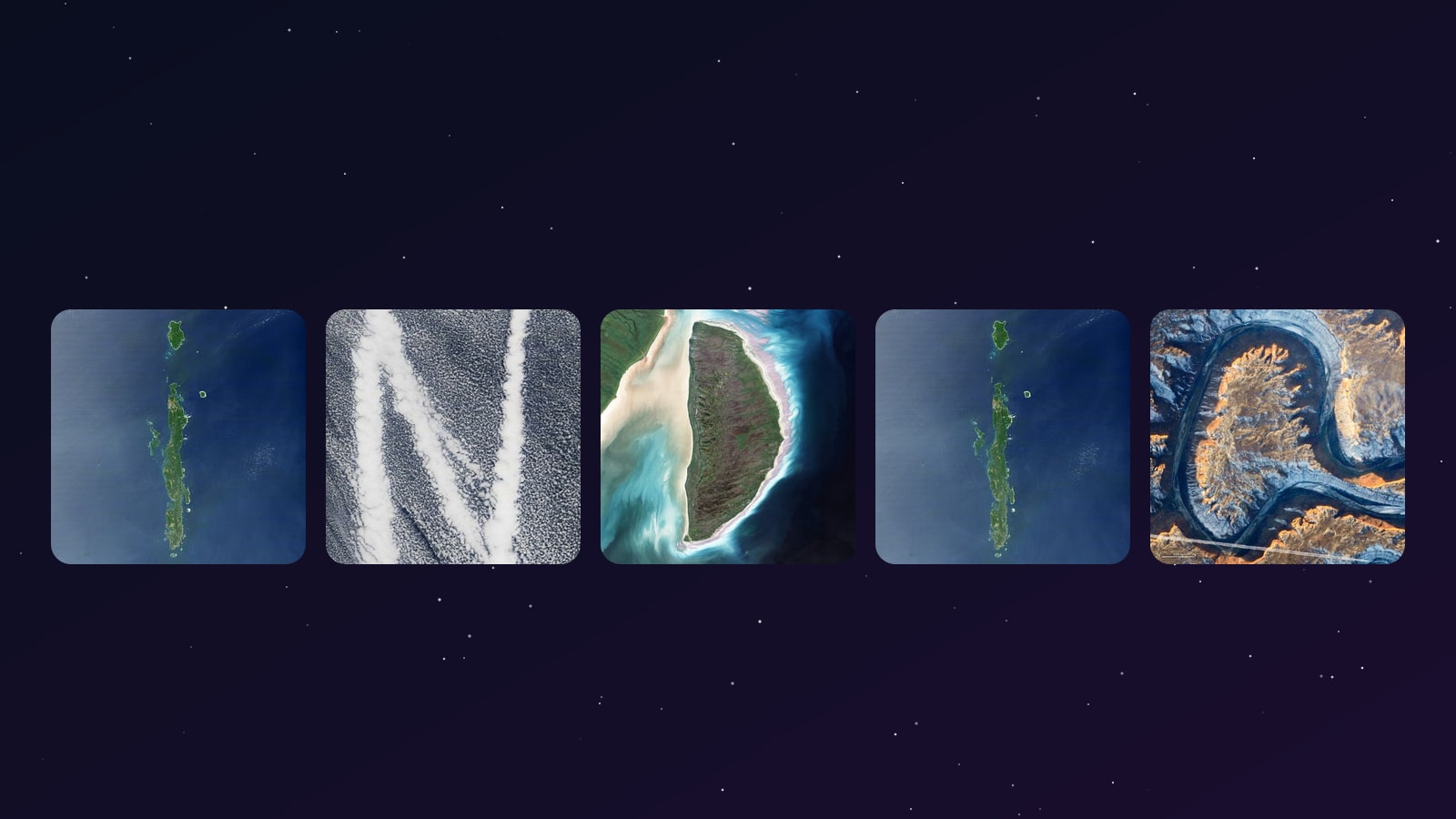
There's a feature on NASA's Earth Observatory site, running quietly since 2012, called Reading the ABCs from Space. The premise is simple: every letter of the English alphabet, found somewhere on Earth, photographed from orbit. A river bend that looks exactly like a J. An island chain in the shape of an I. A crater with a curl of river feeding it that traces a perfect Q.
It took the NASA team over a decade to find all 26. Some letters were obvious from the first satellite pass - O turns up wherever there's a circular crater. Others were brutal. NASA's own writers describe A, B, and R as "maddeningly difficult." Eventually, every letter was found.
In August 2024, NASA wrapped that dataset in an interactive web toy called Your Name in Landsat. You type your name; it draws each letter using a real Earth photograph; you save the result. Within 18 months it had been used over 715,000 times.
We've spent the last few weeks building a free reimagining of that tool with a few features layered on top. It's live now: Your Name On Earth.
What it does
Type a name (up to 12 letters). The tool stitches together real NASA satellite and astronaut photographs of Earth, one per letter, into a single horizontal strip. You can:
- Read a one-line story about each place (where it is, which satellite shot it, what's interesting about the geography).
- Click through to NASA Earth Observatory for the full-resolution original.
- Download a 2400 × 1500 PNG share card.
- Copy a share link that reopens with the same name pre-rendered (
?text=NAME). - Send straight to X, WhatsApp, or the system share sheet.
It runs entirely in your browser. Nothing is uploaded. No account is required. No ads on the page.
What's different from NASA's tool
The Landsat archive and the alphabet curation are NASA's. The image source is the same. We didn't change a single pixel of the satellite photography itself.
What we added are four things that turned out to matter once we started using NASA's tool ourselves:
Place stories under every letter. NASA's tool annotates each letter with a coordinate pair - 12.5°N, 92.8°E. That's accurate but not legible. Most people can't tell at a glance whether they're looking at the Caribbean or the Bay of Bengal. So every letter on our version has a place name, a country flag, the satellite that took the photo, the date, and a single sentence of context. When "I" turns out to be the Andaman Islands and the bright ring around several islands turns out to be coral reefs lifted up by the 2004 Sumatra earthquake, we say so.
Share-back permalinks. When you generate a name on NASA's tool and share the result, you share a screenshot - the recipient sees the picture but can't open the tool with the same name pre-loaded. Our share button copies a URL with the name baked in (/tools/your-name-on-earth/?text=PRIYA). The recipient taps it, sees the same name rendered immediately, and can iterate or download from there.
A share-card PNG. Instead of exporting the rendered strip at its native size, we composite it onto a 2400 × 1500 starfield card with credits. The dimensions are deliberate: that ratio fits in X / WhatsApp / LinkedIn previews while keeping the letters crisp, and it works as a profile background or wedding-card mock at print resolution.
Mobile-first input placement. The input box sits directly below the rendered strip on every screen. On a phone, that's the difference between scrolling four times to retype and tapping once. The longer "place stories" content moves below the input - readable later but never blocking your next attempt.
A complete side-by-side feature table is in the companion comparison article.
Try a few of these
Some letter combinations look better than others. A few that render cleanly:
- NOVA - four punchy letters from four continents.
- EARTH - the ridges and rivers literally spell the planet's own name.
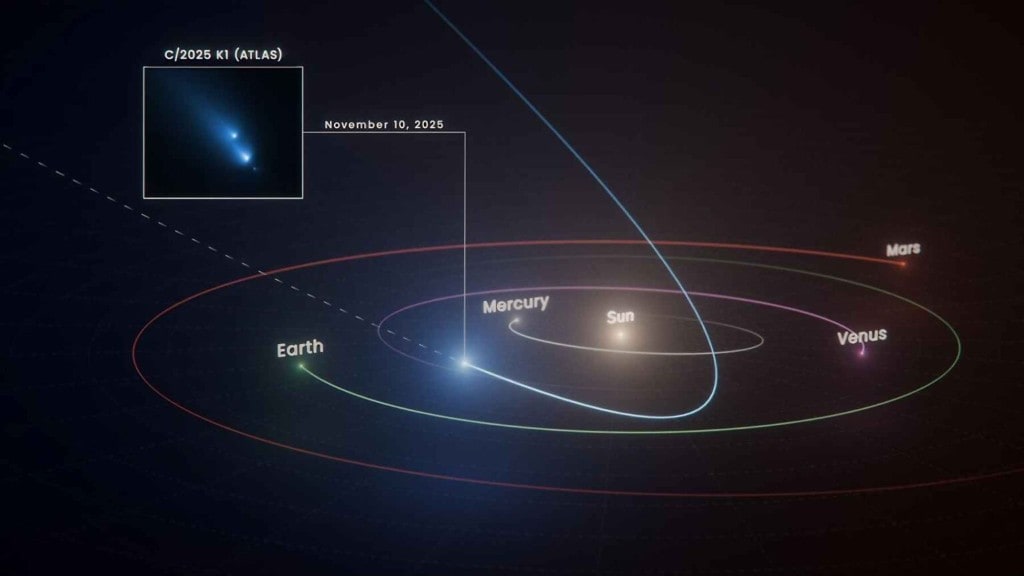
- ATLAS - for Comet ATLAS, which Hubble caught fragmenting last November.
- TOKYO - Crater Lake's near-perfect O is the standout.
- DELHI - the L is a glacier in the Karakoram; the H is a river bend.
- MUMBAI - the Tien Shan mountains as M.
- PRIYA - the Andaman Islands as I.
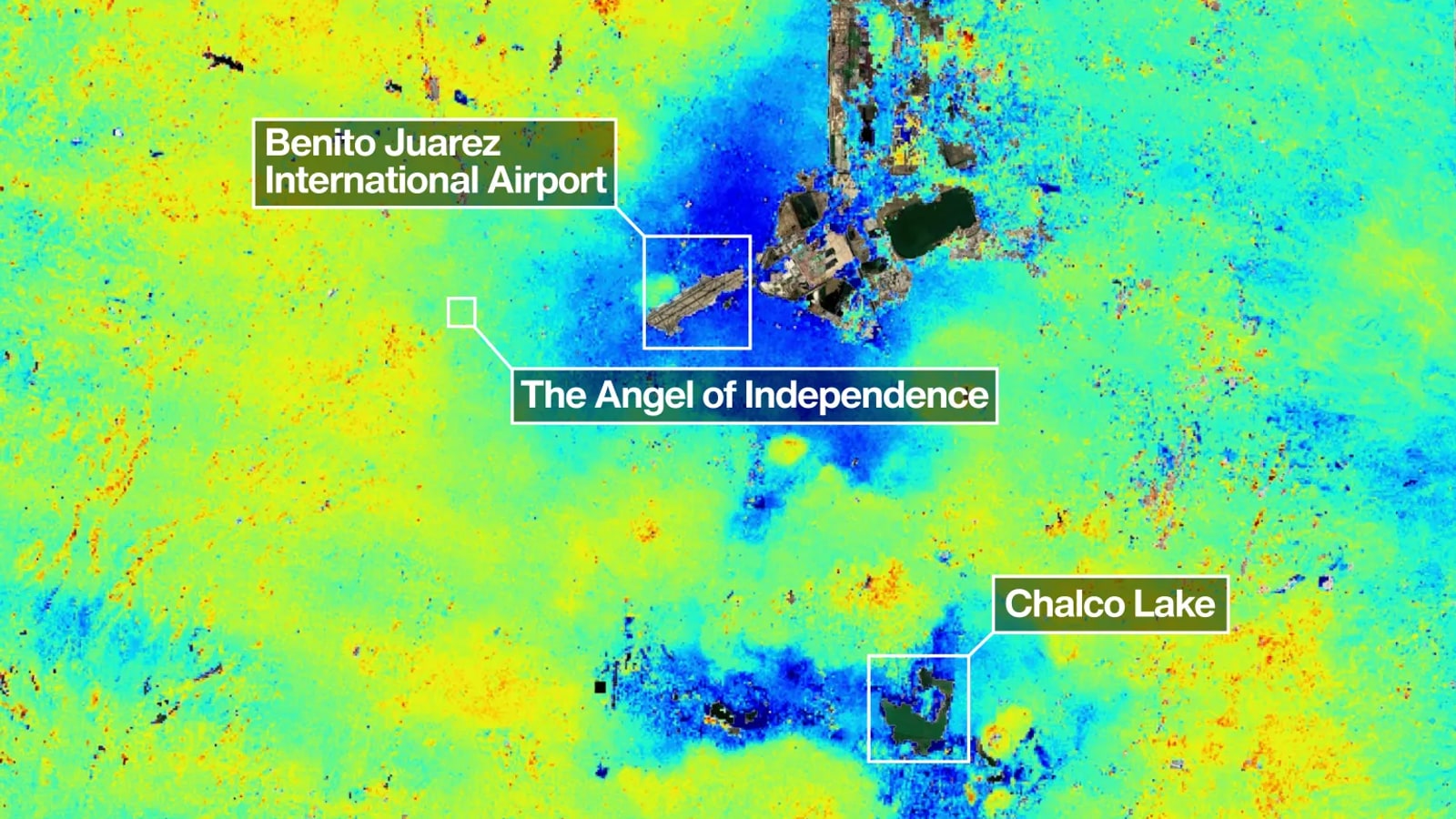
- NISAR - for the ISRO–NASA radar satellite that just mapped Mexico City sinking.
Or just type your own name and see what the planet hands you.
How the imagery was assembled
The 26 letter images come from NASA Earth Observatory's "Reading the ABCs from Space" set, captured over a decade by:
- Landsat 7 and Landsat 8 - the long-running US Earth-observation satellites. Most of the long-form river and coastline shots come from these.
- Terra (MODIS / ASTER) and Aqua (MODIS) - daily-pass instruments that produced wide-field shots like the Andaman Islands letter.
- Astronaut photography from the International Space Station - for some of the harder letters, where the satellite passes happened to miss the right angle and a human in orbit had a better view.
- A handful of regional and partner missions where the geometry happened to line up.
Every individual image is in the public domain under 17 USC §105 (works of the US federal government). Click any "NASA source" link in the tool to read the original Earth Observatory write-up of the place.
What's next
The current version ships with one curated image per letter - 26 in total. On the roadmap, in honest priority order:
- A custom OG share card - when you paste a share link in WhatsApp / X / LinkedIn today, the link preview shows the generic site card. We want it to show the actual rendered name.
- Multiple images per letter with a swap button - pick a different "S" if the default isn't to your taste. The dataset has options; we just need to wire the UI.
- A small world map showing where on Earth each letter's photograph was taken.
- Additional scripts - Latin is done. We're researching what's needed to support Devanagari, Tamil, Cyrillic, Greek, and Arabic. Each script needs its own curated image set, which is the slow part.
- Letter of the day - a daily featured place revealed alongside the rendered strip.
If you generate something interesting - a profile picture, a header, a card - send it to us. We're collecting the best ones for a future round-up.
Credit where it's due
The tool would be impossible without three groups of people:
- NASA Earth Observatory - every image is theirs, freely shared.
- The "Reading the ABCs from Space" team - for the curatorial work of finding all 26 letters in real Earth features over more than a decade.
- The "Your Name in Landsat" team - Ross Walter, Allison Nussbaum, and Ginger Butcher of the Landsat Project Science Support Team - for the original idea of letting users compose those letters into names interactively.
We've built on top of that work, not replaced it.
→ Try the tool: Your Name On Earth → Read the side-by-side: Your Name On Earth vs NASA's "Your Name in Landsat" → The original: NASA's Your Name in Landsat