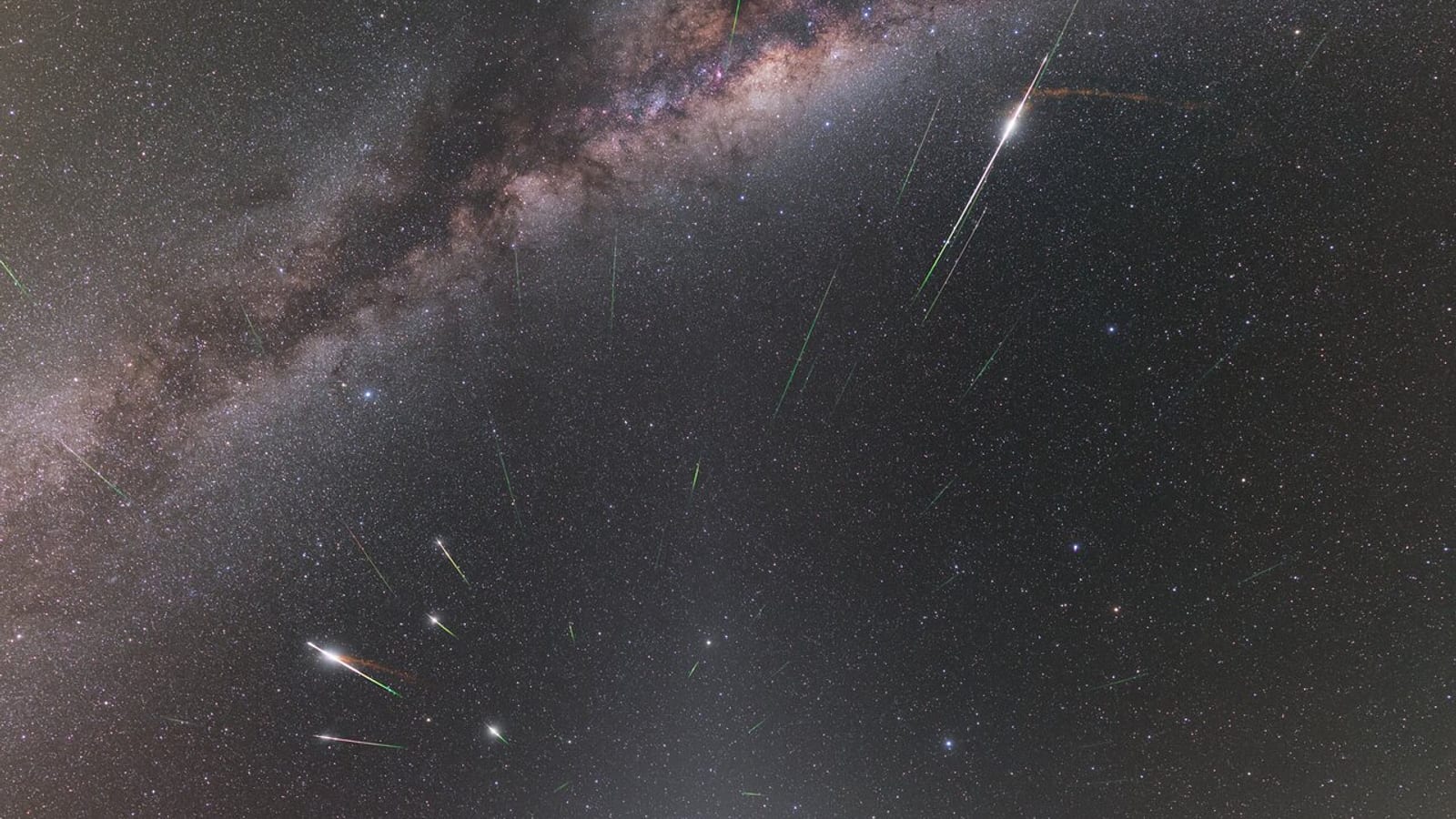
Every year in early May, Earth ploughs through a stream of dust shed by Comet 1P/Halley. Most of those grains are no bigger than a grain of sand, but they hit the atmosphere at 66 km/s - fast enough to vaporize in a flash of light. That's the Eta Aquariid meteor shower, and the 2026 peak is on the night of May 5–6.
When to watch
- Peak night: May 5 → 6, 2026 (UTC)
- Best window: Roughly 2 hours before local dawn, anywhere on Earth
- Active range: April 19 – May 28
The radiant - the point in the sky meteors appear to stream from - sits in the constellation Aquarius and only rises a few hours before sunrise from northern latitudes. That's why pre-dawn is the magic time.
How many you'll see
This depends almost entirely on your latitude:
- Southern Hemisphere & tropics: 40–60 meteors per hour at peak
- Mid northern latitudes (~30–40°N): 10–30 per hour
- Higher northern latitudes (>50°N): Fewer than 10 per hour
The meteors themselves tend to be fast and leave persistent glowing trains - a Halley signature.
The Moon problem
In 2026, a waning gibbous Moon (~84% illuminated) rises late in the evening and stays up through the pre-dawn peak. Its glare will wash out fainter meteors. Two ways to fight back:
- Block the Moon physically - sit so a building or hill is between you and it.
- Wait for the brightest fireballs - Eta Aquariids produce more bright meteors than most showers, and these will punch through the moonlight.
Viewing tips
- Get away from city lights if possible. Even a 30-minute drive helps a lot.
- Lie on your back with feet pointing roughly east. You don't need a telescope - your eyes' wide field of view is what you want.
- Give your eyes 20 minutes to dark-adapt. No phone screens.
- Dress warmer than you think you need to - pre-dawn temperatures drop fast.
Why this shower is worth losing some sleep over
Meteor showers like the Eta Aquariids are the easiest astronomy event to share. No equipment, no expertise - just look up. They're also one of the rare cases where you can directly experience our solar system's geometry: those streaks of light are pieces of a comet that passed by 200 years ago, finally meeting our atmosphere.