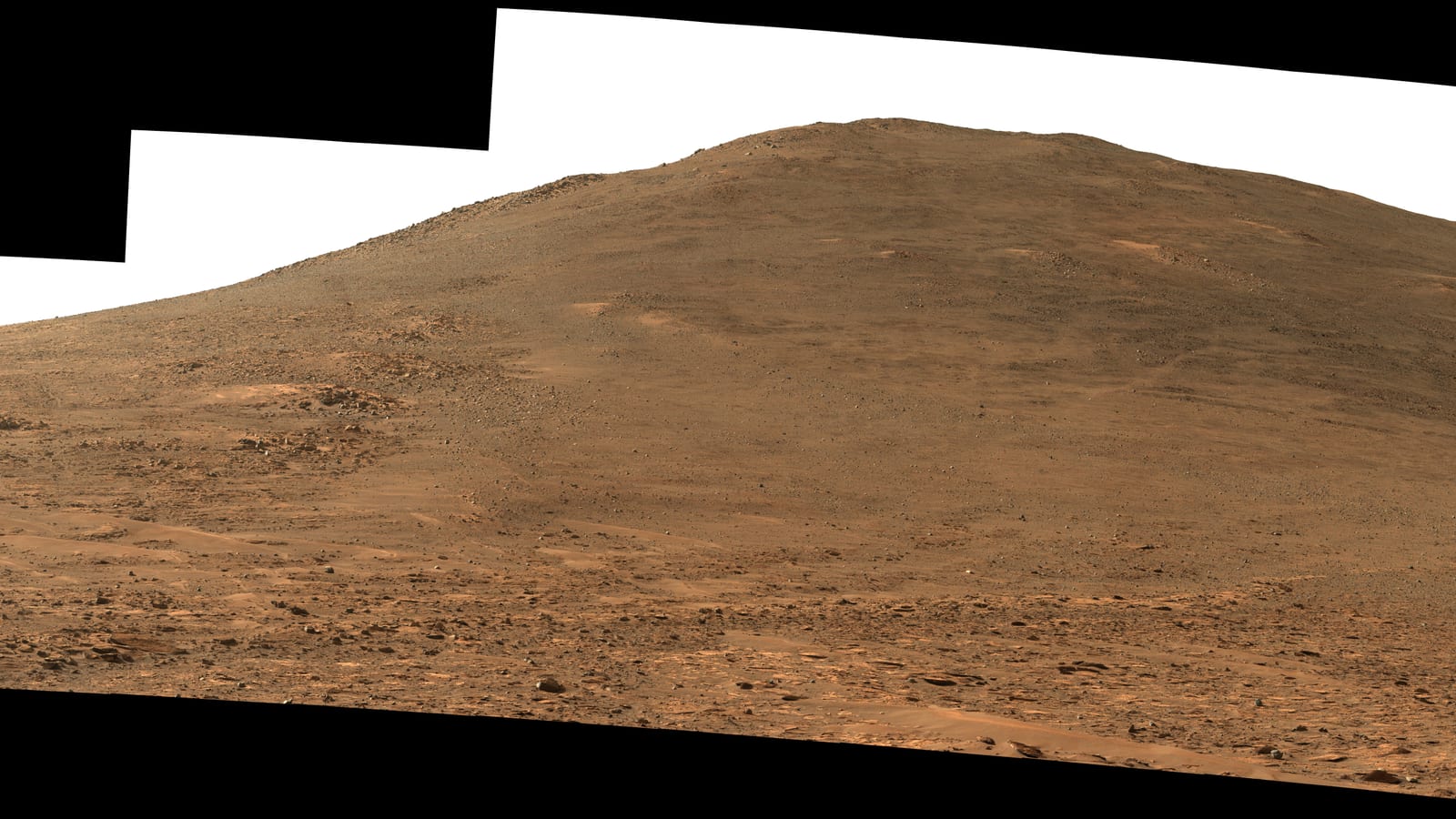
NASA's Perseverance rover has spent the past year exploring the rim of Jezero crater - a fundamentally different kind of Martian terrain than the riverbed and crater floor it had spent its first three years investigating. The rover summited the rim at "Lookout Hill" in December 2024 after a 500-meter, 3.5-month climb, and what it has found in the months since is changing how scientists think about Mars's oldest rocks.
What's happened so far
Since cresting the rim, Perseverance has been working its way down "Witch Hazel Hill," a 100-meter-tall outcrop of layered rock the science team likens to "pages in the book of Martian history." According to NASA's most recent campaign update, the rover has cored five rocks and sealed three samples, performed close-range analysis on seven, and laser-zapped 83 more from a distance - the mission's fastest pace of science collection since landing in 2021.
Why the rim rocks are geologically different
The rim rocks are geologically distinct from anything Perseverance had encountered before. They include fragments of crust thrown skyward by ancient meteor impacts billions of years ago - pieces of Mars from kilometers underground that would otherwise be inaccessible. Jezero crater itself was formed by an impact about 3.9 billion years ago, but the megabreccia blocks on the rim may be older still, perhaps dating to even earlier impact events.
If those rocks contain organic compounds or signatures of past microbial activity, they would push the search for ancient Mars life into a much earlier chapter of the planet's history than the rover's earlier delta investigations could probe.
Where the rover is heading next
Perseverance is currently traversing toward "Lac de Charmes" - a site on the plains beyond the crater rim, less affected by the violence of the Jezero impact. After that, the rover will return to the rim to study a striking outcrop of large megabreccia blocks. The team plans to drive about 6.4 km in total over the campaign and visit as many as four scientifically distinct sites.
The rover is now operating well past its original primary mission length (one Martian year, ~687 Earth days). Mission updates from Perseverance, Curiosity, and the next wave of Mars hardware land daily on our news section.